Choosing the Right Digital Assets: An Evaluation of Summer Floral Seamless Papers for Creative Projects
In the realm of digital design and crafting, the selection of background textures and patterns often dictates the tone and professionalism of the final output. For designers, scrapbookers, and content creators working on seasonal themes, Summer Floral Seamless Papers represent a specific category of digital assets designed to bridge the gap between high-resolution print requirements and flexible digital application. Understanding what makes these resources distinct, how they compare to other file formats, and where they fit within a broader creative workflow is essential for making an informed purchasing decision.
Defining the Asset: Format and Functional Specifications
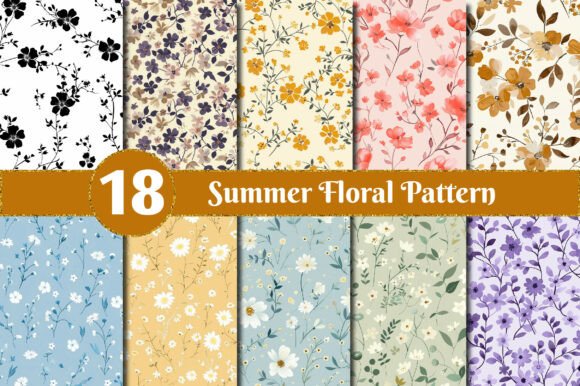
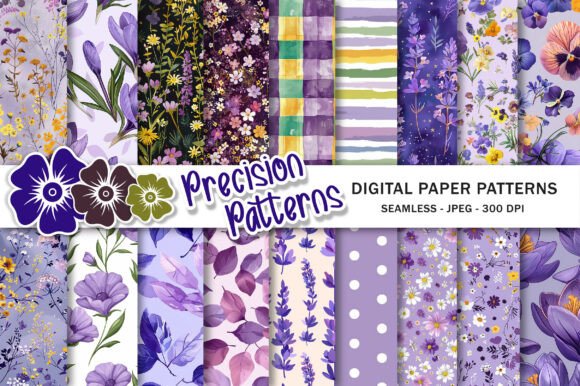
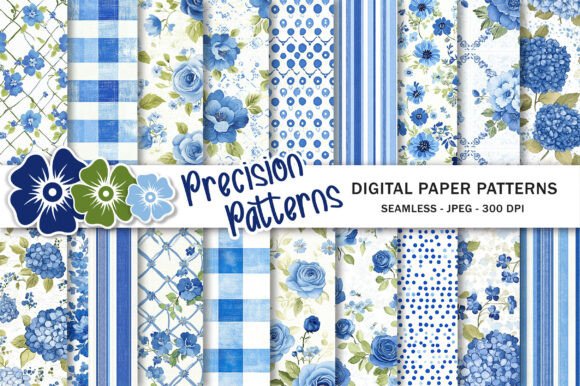
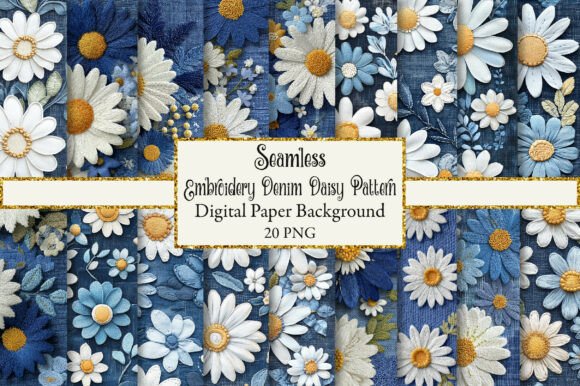
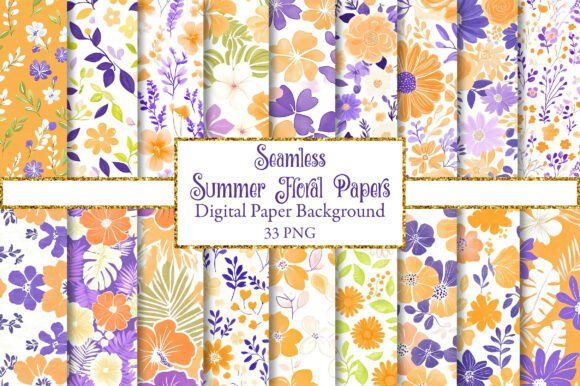
At their core, Summer Floral Seamless Papers are high-resolution digital images featuring botanical motifs characteristic of the summer season—blooming florals, lush greenery, and vibrant color palettes. However, the term "seamless" carries significant technical weight. Unlike standard illustrations with hard edges or defined borders, seamless papers are tiled textures. This means the image can be repeated horizontally and vertically without visible lines or breaks, creating an infinite background pattern. This characteristic is particularly valuable for web design, large-format printing, and filling variable spaces in layout software.
The specific technical specifications of a typical set, such as one containing 33 unique designs in PNG format at 12″ x 12″ with 300 dpi resolution, offer a balanced approach to versatility. The 300 dpi (dots per inch) resolution is the industry standard for professional printing. It ensures that when these papers are used for physical items like wedding invitations, birth announcements, or packaging, the output remains crisp and free of pixelation. Conversely, the PNG format supports transparency, although in the context of full-sheet background papers, it primarily ensures lossless quality retention during editing. The 12″ x 12″ dimension is a legacy standard from the physical scrapbooking industry, making these digital files immediately compatible with digital scrapbooking software that mimics traditional page sizes.
Comparative Analysis: Seamless Patterns vs. Static Illustrations
When evaluating resources for a project, creators often weigh seamless papers against static illustrations or vector graphics. Each serves a different purpose, and recognizing the tradeoffs is crucial.
Static illustrations are ideal when a specific focal point is needed, such as a single large flower on a greeting card. However, they lack the adaptability of seamless patterns. If a designer needs to cover a website header or a large product box, a static image must be stretched, which often leads to distortion, or placed repeatedly, which creates obvious, distracting grid lines. Summer Floral Seamless Papers eliminate this issue. They allow the user to fill any canvas size, from a small planner sticker to a massive trade show banner, while maintaining visual consistency.
Furthermore, comparing these raster-based PNG papers to vector files (such as SVG or AI formats) reveals another layer of decision-making. Vector files are mathematically based and can be scaled infinitely without quality loss, making them superior for logo design or signage viewed from a distance. However, vectors often lack the complex textural depth, watercolor bleeds, and photographic realism found in high-resolution raster papers. For projects requiring an organic, hand-painted aesthetic—common in wedding stationery and boutique packaging—the 300 dpi PNG format of floral seamless papers often provides a more authentic look than the sometimes sterile appearance of vector art.
Application Scenarios: Where These Resources Excel
The utility of Summer Floral Seamless Papers extends across various mediums, but they are particularly effective in scenarios requiring texture and atmosphere.
- Print-on-Demand and Packaging: For entrepreneurs creating custom packaging for summer products, seamless papers allow for the creation of repeating patterns that wrap around boxes or bags without awkward cuts. The high resolution ensures the branding looks premium.
- Digital Scrapbooking and Planning: The 12″ x 12″ format is natively supported by most digital planning apps and scrapbooking software. Users can easily resize elements, layer stickers, and journal over these backgrounds without worrying about alignment issues inherent in non-seamless images.
- Web and Social Media Design: For blog headers, social media banners, and website backgrounds, seamless patterns provide a lightweight yet visually rich alternative to heavy photography. They can be tiled via CSS to load quickly while providing a consistent brand aesthetic.
- Event Stationery: Weddings and birthdays often require coordinating materials across different sizes (invitations, menus, place cards). A seamless pattern ensures that the background motif remains consistent regardless of the paper stock or cut size used by the printer.
Limitations and Considerations for the Buyer
While versatile, Summer Floral Seamless Papers are not a universal solution for every design challenge. Potential buyers must consider specific limitations before integrating them into their workflow.
First, the raster nature of PNG files means they are resolution-dependent. While 300 dpi is excellent for prints up to 12 inches, enlarging a single tile to cover a billboard or a very large wall mural may result in blurriness. In such cases, a vector alternative or a specifically engineered large-format texture would be a more appropriate choice. Second, the "summer" theme, while popular, is seasonal. Designers building evergreen brand assets might find these specific floral motifs too date-specific compared to abstract geometric patterns or neutral textures.
Additionally, the ease of resizing mentioned in product descriptions relies heavily on the software used. While modern tools like Adobe Photoshop, Procreate, or Canva handle resizing well, users must understand the difference between scaling an image for screen use (72 dpi) versus print (300 dpi). Simply stretching a low-resolution preview will not yield professional results; the value lies in accessing the original high-dpi source files included in the download.
Decision Factors: Is This the Right Resource for Your Project?
Deciding whether to invest in a set of Summer Floral Seamless Papers comes down to the specific demands of your current and future projects. If your work involves frequent need for backgrounds that must adapt to varying aspect ratios—such as switching from an Instagram story to a YouTube thumbnail—seamless patterns offer a time-saving advantage over hunting for new static images for every dimension.
Moreover, for those who enjoy the process of layering and compositing, the PNG format offers a robust foundation. Unlike JPEGs, which introduce compression artifacts upon repeated saving, PNGs maintain integrity, which is vital for professional archival and re-editing. The inclusion of 33 unique designs in a single set also provides a cohesive palette, reducing the time spent trying to match colors and styles from disparate sources.
However, if your primary need is for isolated clipart elements to place on solid colors, or if you require infinite scalability for large-format signage, you may need to supplement these papers with vector icons or higher-resolution specialized textures. The ideal approach often involves a hybrid workflow: using seamless papers for backgrounds and atmospheric depth, while pairing them with distinct foreground elements.
Final Thoughts on Digital Resource Selection
In the crowded marketplace of digital design assets, Summer Floral Seamless Papers stand out for their balance of aesthetic appeal and technical functionality. They cater to a wide demographic of creators, from hobbyists making birthday cards to professionals designing e-commerce packaging. By offering a high-resolution, tileable solution, they solve common problems related to scaling and consistency. Yet, like any tool, their effectiveness depends on the user's understanding of their specifications and limitations. By evaluating the need for texture versus scalability, and print versus digital output, creators can determine if this specific type of asset aligns with their project goals. Ultimately, the value of such a collection lies not just in the beauty of the florals, but in the flexibility they afford the designer to execute a vision across multiple mediums without compromising quality.